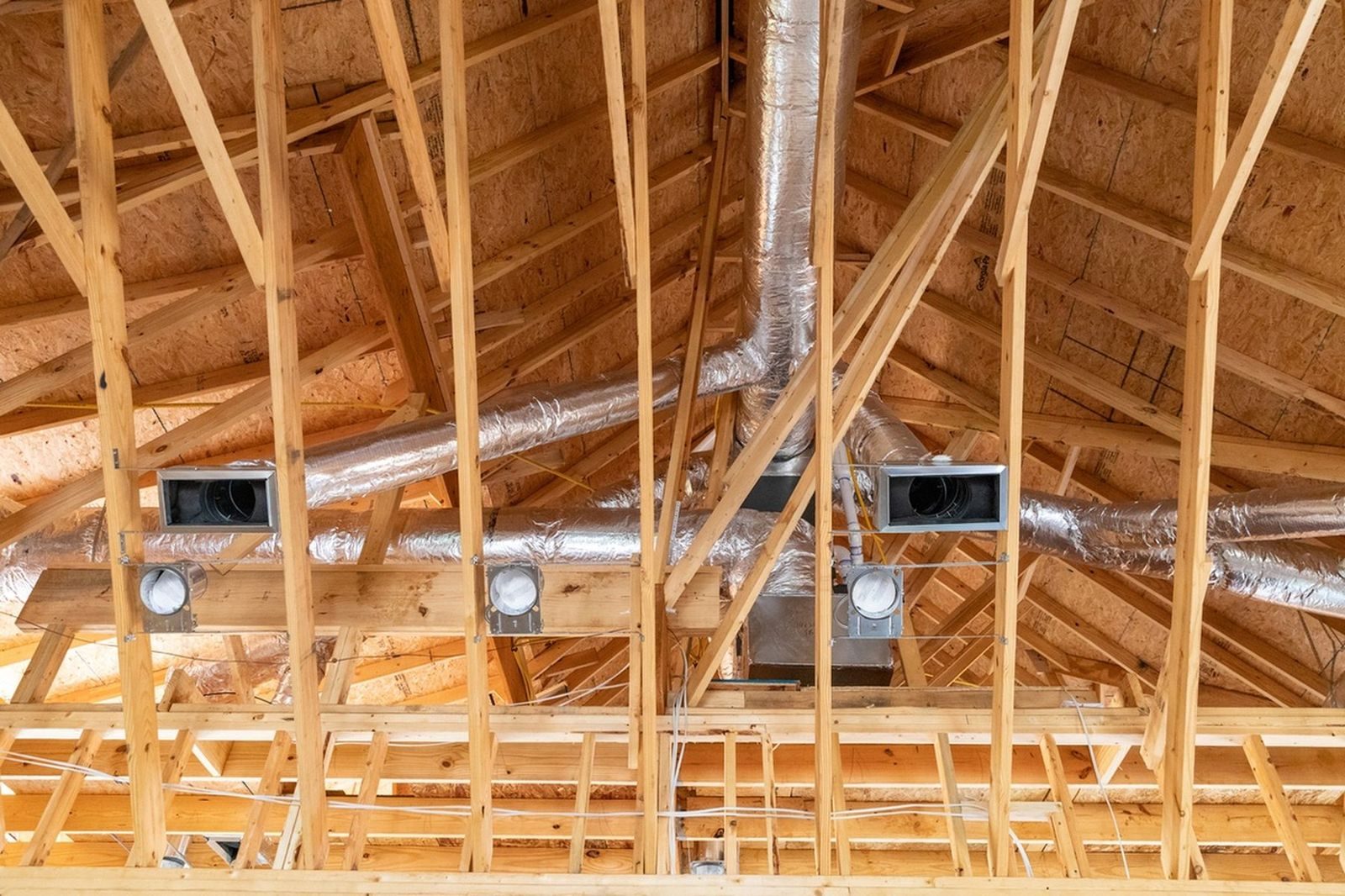
Sometimes the equipment is fine and the size or the ductwork is the real issue. It's the thing most HVAC companies never actually check.
An air conditioner that's too big for the house cools the air fast, satisfies the thermostat, and shuts off, often in under ten minutes. That sounds like a good thing. It isn't. Removing humidity from the air takes sustained airflow over a cold coil, not a quick blast. A short cycle drops the temperature without ever running long enough to actually dry the air out.
The result is a house that reads 72° on the thermostat and still feels clammy, a musty smell when the system kicks on, and a unit that's constantly starting and stopping instead of running smoothly. Over years, that trapped moisture can warp doors, feed mold behind walls, and quietly cost more in damage than the AC ever did in repairs.
This is one of the more common issues we find in Houston homes, and it often goes undiagnosed, because there's no broken part to point at. When sizing or design turns out to be the cause, finding it takes a company willing to do the math instead of guessing. We'll confirm what's actually happening in your home before sharing our findings.
Properly sizing a system means running an actual load calculation, room by room, that accounts for square footage, ceiling height, insulation levels, window placement, and how much direct sun each side of the house gets. It's engineering, not guesswork.
Most of the time, a system gets replaced by matching whatever tonnage was already there, or rounding up "to be safe." Rounding up is exactly backwards. A bigger unit doesn't mean more comfort, it means shorter cycles, worse humidity control, and a system that wears out faster from constantly starting and stopping.
» Square footage and ceiling height, room by room
» Insulation quality and window efficiency
» Sun exposure on each side of the house
» Existing duct condition and layout
» How the current system has actually been performing
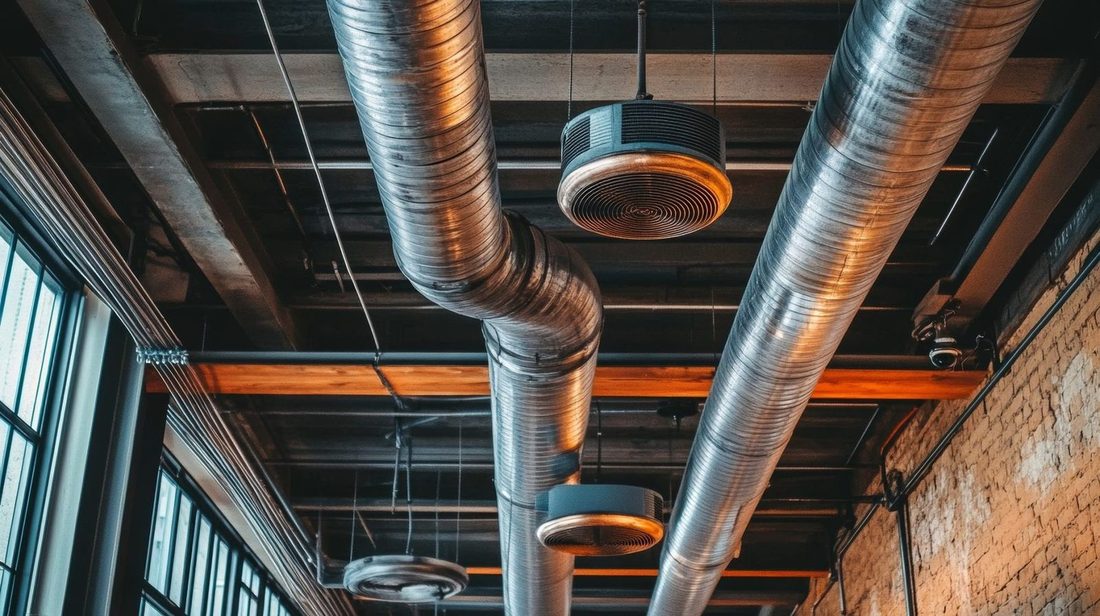
Not every home needs the most expensive option. Knowing the real difference matters, especially in a climate as humid as Houston's.
Runs at full power until the thermostat is satisfied, then shuts off completely, like a light switch. Lower upfront cost, and the least effective at controlling humidity, since it rarely runs long enough on mild days to dry the air out properly.
Runs at a lower capacity on mild days and steps up to full power only when it's genuinely needed. Better humidity control and quieter operation than single-stage, at a moderate step up in cost.
An inverter-driven compressor can run anywhere from roughly 25% to 100% capacity, adjusting continuously instead of stepping between fixed settings. It runs longer at lower, gentler speeds, which is exactly what pulls humidity out of the air properly.
A single-stage system is a light switch: full blast or completely off, nothing in between. A variable-speed system is a dimmer: it can run at a low, steady setting most of the time and only ramp up when it actually needs to. That's the whole idea behind inverter technology, the compressor can speed up or slow down instead of just switching on and off.
Running gently and steadily instead of blasting and stopping is also why these systems are noticeably quieter, and why they wear out more slowly. Fewer hard starts and stops means less strain on the equipment over the years. Some inverter-driven heat pumps can also keep producing heat efficiently even on genuinely cold nights, which older single-stage heat pumps often struggle with, so there's less reliance on backup electric heat kicking in.
Variable-speed systems typically run 20 to 40 percent more efficiently than single-stage equipment, hold indoor temperature within about a degree instead of swinging several degrees between cycles, and run quieter with less mechanical wear since they're not constantly slamming on and off. For a climate where summer humidity regularly sits between 60 and 80 percent, that longer, gentler run time isn't a luxury feature, it's the actual engineering fix for the clammy-house problem. We'll always tell you whether your home needs one, or whether a correctly sized two-stage system gets you the same result for less.
An older system can usually be patched up, at least for a while. Once equipment gets old, one repair often isn't the last one. A capacitor fails this year, a fan motor goes next year, and eventually it's the compressor. Each of those is its own bill.
On top of that, an aging system is almost always running less efficiently than a new one, even between repairs. That shows up quietly on the power bill every single month, not as one big number, just a little more than it should be, every month, for years.
Add it up over a couple of years, several repair bills plus a slightly higher power bill every month, and the total can end up costing more than replacing the system would have in the first place. A correctly sized new system doesn't just stop the repeat repair calls. It uses less electricity every month, so part of what it costs comes back over time in lower bills.
If a repair is genuinely the smarter move, we'll say so and fix it. Once repairs start becoming a pattern on an older system, we'll walk you through the real numbers, what repairs are likely to keep costing versus what a new system costs and saves, so the decision is based on the actual math for your situation, not a guess or a sales pitch.
Even a correctly sized system can't perform if the ductwork feeding it is undersized, leaky, or badly laid out. Rooms far from the air handler starve for airflow while rooms near it get blasted, bills climb, and the system works harder than it should just to compensate for a design problem.
We design and correct ductwork for new construction, remodels, and existing homes that have never felt right, sizing each run to actually deliver the air the load calculation says that room needs.
Ventilation codes based on ASHRAE 62.2 call for roughly 0.35 air changes per hour in a typical home, equivalent to exchanging the entire volume of indoor air for fresh air about eight times over a 24-hour day. Hitting that number depends on ductwork that's actually sized to move that air, not just equipment that's rated for it.
"Improper installation can reduce system efficiency by up to 30 percent," according to ENERGY STAR, the EPA and Department of Energy's joint efficiency program. That's not a small dial to move on your electric bill, and it's exactly the kind of problem a proper design catches before the system ever gets installed.
» The house feels damp or clammy even when it's cool
» One or two rooms never keep up with the rest
» The unit switches on and off in short bursts
» Energy bills climb every year with no explanation
» Musty smell when the system kicks on
Any of these can have more than one cause. We'll evaluate the system and tell you what's actually behind it.
One cause worth ruling out is an oversized system. A unit that's too big cools the air quickly, satisfies the thermostat, and shuts off before it has run long enough to pull moisture out. Confirming it takes an on-site evaluation.
It's the engineering step that measures exactly how much heating and cooling your specific home needs, room by room, instead of guessing. Skipping it is how most oversizing problems happen in the first place.
Single-stage is on or off. Two-stage has a low and a high setting. Variable-speed, or inverter, constantly adjusts anywhere in between, which is what actually solves humidity problems.
Often yes in Houston specifically. Better efficiency, steadier temperatures, and it's purpose-built for exactly the humidity problem oversized systems create. We'll tell you if a simpler system gets you the same result for less.
Free evaluation, straight answer, no pressure toward the most expensive option.